
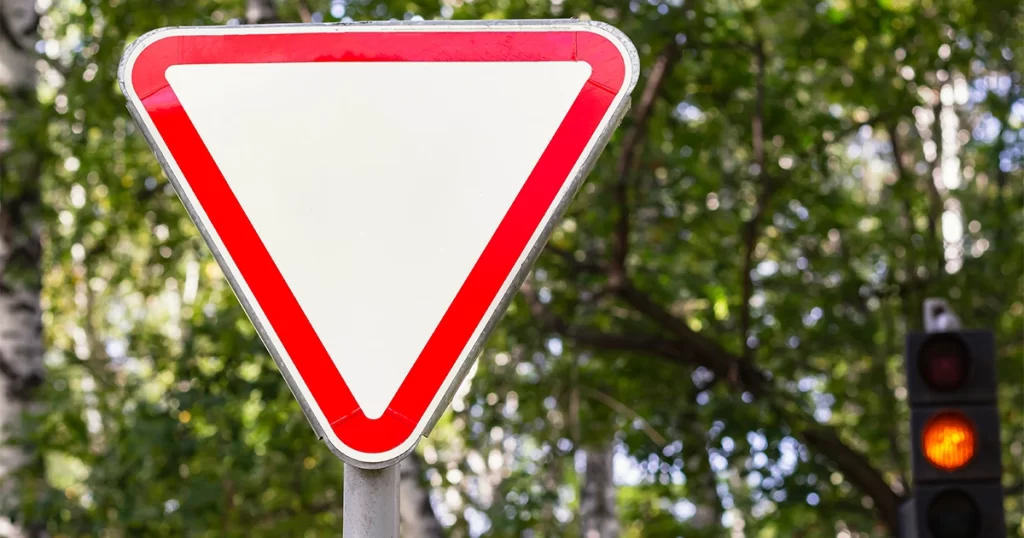
Driving safely requires understanding traffic laws, including the meaning of “yield.” Many accidents occur when drivers fail to yield at intersections, crosswalks, or merging lanes. In Houston, proper yielding helps prevent crashes and legal trouble.
In driving, yield means giving the right-of-way to another vehicle, pedestrian, or cyclist. The party with the right-of-way proceeds first, while others wait until it is safe. Because failure to yield often determines fault in accidents, a Houston car accident lawyer can help injured victims understand liability and pursue compensation.
Common Situations That Require Yielding
Understanding the situations in which drivers must yield is key to safe driving. In Houston, the following scenarios are particularly important:
1. Intersections
At intersections, drivers must yield at stop signs and red lights, coming to a complete stop before the stop line or crosswalk, or if none is present, where they have a clear view of oncoming traffic. A yellow light is not a stop signal but a warning that the light is about to turn red. Drivers must yield to vehicles already in the intersection or those with the right-of-way before proceeding.
2. Pedestrian Crossings
Pedestrians always have the right-of-way at intersections and crosswalks. Drivers must stop if a pedestrian is in the same half of the roadway. Failing to yield to pedestrians can result in traffic citations and significant liability if an accident occurs.
3. Roundabouts (Rotary Traffic Islands)
Roundabouts require drivers to yield to traffic already in the circle. Stop at the yield sign before entering, and proceed only when the way is clear. Yielding in roundabouts ensures smooth traffic flow and prevents collisions, particularly in busy Houston neighborhoods.
4. Merging Lanes
When entering a highway or merging into traffic, drivers must yield to vehicles already traveling in the lane. Signs and pavement markings typically indicate which lane must yield. Failing to yield while merging is a frequent cause of accidents on busy Houston freeways.
Consequences of Failing to Yield
Ignoring yield rules can have serious legal and financial consequences, because these penalties are established under Texas law and enforced by police and courts. Under Texas Transportation Code § 542.4045, if a failure‑to‑yield violation causes a collision with injury, drivers face a fine of $500–$2,000, and $1,000–$4,000 if serious bodily injury results, penalties that are legally mandated, not optional.
- Traffic Citations
Police officers issue citations for failing to yield, and these fines are set by statute, meaning they’re official and enforceable in court. - Liability for Damages
Drivers who fail to yield are legally responsible for accident‑related costs like medical bills, lost wages, and pain and suffering, and may be liable in insurance claims or lawsuits. - Accident Risk
Failing to yield is a leading cause of crashes, especially at intersections and crosswalks; knowing and following the law helps protect everyone on the road.
The Role of a Car Accident Attorney
When a failure-to-yield accident occurs, legal disputes often arise over which driver had the right-of-way. Hiring a Houston car accident lawyer can protect your rights and ensure you receive proper compensation. Our Lawyers typically use strategies such as:
- Case Evaluation: Review the accident details, assess liability, and determine potential damages.
- Evidence Gathering: Collect police reports, witness statements, traffic camera footage, and accident reconstruction data to establish who was at fault.
- Insurance Negotiation: Handle all communications with insurers, counter low settlement offers, and advocate for maximum compensation.
- Liability Analysis: Identify any shared fault, contributory negligence, or legal defenses that could affect the outcome.
- Litigation Preparation: Prepare strong legal arguments and represent clients in court if a fair settlement cannot be reached.
- Claim Maximization: Calculate both economic damages (medical bills, lost wages) and non-economic damages (pain and suffering, emotional distress) to ensure full compensation.
By applying these strategies, a skilled lawyer can prove liability, protect you from wrongful claims, and help you recover the compensation you deserve.
Get Help from a Houston Car Accident Lawyer
Yielding is more than just a guideline; it is a critical traffic law principle that protects drivers, pedestrians, and cyclists. Understanding when and how to yield in Houston can prevent accidents, avoid citations, and ensure the safe flow of traffic.
Failing to yield can have serious consequences, including fines, liability for damages, and legal disputes. If you or a loved one has been involved in a failure-to-yield accident, contact The Law Office of Keivan S. Romero. We will carefully review your case, explain your legal options, and help you pursue the compensation and protection you deserve.