
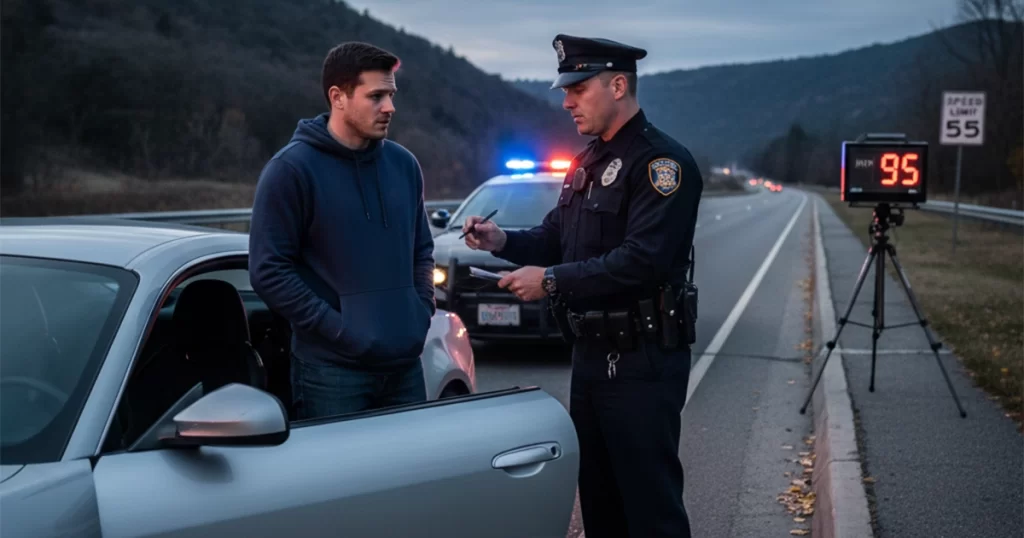
When you’re pulled over for speeding in Texas, it’s natural to worry about the consequences. Most speeding tickets are civil violations, but certain situations can elevate them to misdemeanor charges. Understanding this distinction is important because misdemeanors carry far more serious penalties.
This blog explains when a speeding ticket may become a misdemeanor in Texas and what that means for you legally. If your case involves an accident, injuries, or liability concerns, a Houston car accident lawyer can help you understand your options and protect your rights.
What Is a Misdemeanor Speeding Ticket?
In Texas, most speeding tickets are civil traffic violations. However, under Texas Transportation Code §§545.351 – 545.352, speeding may be classified as a misdemeanor when aggravating factors are present, such as excessive speed or unsafe driving conditions. Misdemeanor speeding can result in fines, jail time, license suspension, and a criminal record.
Whether a ticket becomes a misdemeanor depends on factors like how much the driver exceeded the speed limit and the circumstances surrounding the violation.
Are All Speeding Tickets Misdemeanors?
No, most speeding tickets in Texas are classified as traffic infractions rather than misdemeanors. However, a speeding ticket can become a misdemeanor depending on the circumstances of the violation. Texas law treats certain speeding behaviors as criminal offenses due to the increased risk they pose to public safety.
When Does a Speeding Ticket Become a Misdemeanor?
A speeding ticket may be charged as a misdemeanor in the following situations:
Excessive Speeding
Driving at extremely high speeds, often 25 mph or more over the posted limit, may be prosecuted as a misdemeanor under Texas Transportation Code §545.351, which requires drivers to operate at a safe and reasonable speed given road conditions.
Speeding Combined With Reckless Driving
When speeding is combined with reckless behavior, such as tailgating, weaving through traffic, or running red lights, the violation may qualify as a misdemeanor under Texas Transportation Code §545.401, which defines reckless driving as operating a vehicle with willful or wanton disregard for the safety of others.
Speeding in a School Zone or Construction Zone
Speeding in school zones or construction zones carries stricter penalties. Texas Transportation Code §472.022 imposes enhanced fines and consequences in these areas to protect children, pedestrians, and roadway workers.
Accidents Caused by Speeding
If speeding results in an accident involving injuries, fatalities, or significant property damage, the driver may face misdemeanor or, in severe cases, felony charges depending on the outcome of the incident.
Legal Consequences of a Misdemeanor Speeding Ticket
When a speeding ticket becomes a misdemeanor, the legal and financial consequences are much more severe. These include:
Fines for a Misdemeanor
Misdemeanor speeding tickets often come with much higher fines than standard speeding violations. Depending on the severity of the offense and the local jurisdiction, fines can range from several hundred to several thousand dollars.
Jail Time for a Misdemeanor
While rare, certain situations may result in jail time for misdemeanor speeding. This is especially true in cases where reckless driving or accidents are involved. Jail time can range from a few days to several months, depending on the severity of the offense.
License Suspension
A misdemeanor speeding offense can lead to a suspension or revocation of your driver’s license. In some cases, the court may also require you to attend defensive driving courses or perform community service to regain your driving privileges.
Criminal Record
Unlike a standard speeding ticket, a misdemeanor speeding violation is a criminal offense. As such, it will appear on your criminal record and may have long-term consequences for your job prospects, housing applications, and more.
Increased Insurance Rates
A misdemeanor speeding ticket can also cause your car insurance premiums to skyrocket. Insurance companies often view drivers with criminal violations as high-risk, and you could be forced to pay significantly higher rates for years to come.
How to Avoid a Misdemeanor Speeding Ticket in Texas?
The best way to avoid a misdemeanor speeding ticket is to drive safely and obey the speed limits. By following these steps, you can minimize your chances of being charged with a misdemeanor:
- Always drive within the speed limit, especially in school zones and construction areas.
- Avoid reckless driving behaviors such as weaving in and out of traffic.
- Be aware of the speed limits in different areas to avoid accidental violations.
Next Steps After a Citation
If you’re facing a speeding ticket that could escalate into a misdemeanor, it’s important to take the right steps to protect your driving record and minimize penalties.
- Consult a Lawyer: A Houston motor vehicle accident lawyer can explain the potential legal consequences and guide the best defense strategies. They can negotiate with the prosecution, help reduce fines, and in some cases, work to have charges reduced or dismissed.
- Review Your Driving Record: If you have prior speeding violations, the court may consider your driving history when determining penalties. A lawyer can review your record to identify mitigating factors that could help lower fines or prevent a misdemeanor designation.
- Consider Defensive Driving Courses: Attending a defensive driving course may reduce penalties in eligible cases. Completing a course could help you avoid a misdemeanor charge or lessen its severity.
Protect Yourself From Serious Consequences
Most speeding tickets in Texas are minor and handled with fines or administrative penalties. However, excessive speed, reckless driving, school zone violations, or accidents can escalate a simple ticket into a misdemeanor or more serious criminal offense.
Consulting The Law Office of Keivan S. Romero early can help protect your rights, minimize penalties, and guide you through the legal process with confidence, ensuring your driving record and future are safeguarded.