
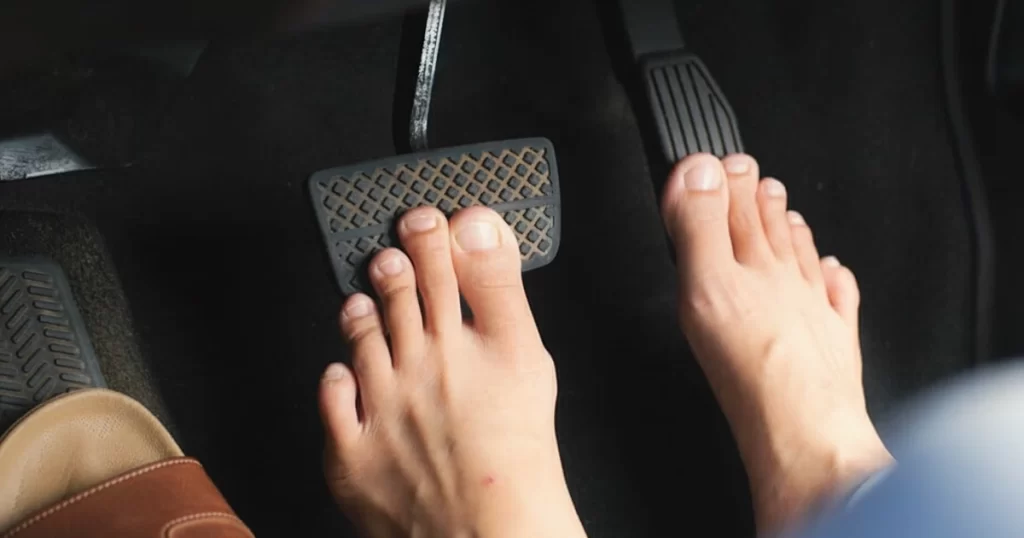
Many drivers believe operating a vehicle without shoes is illegal, but that is a myth. Driving barefoot is legal in Texas, and there is no state or federal law prohibiting it; this is true in every U.S. state.
However, legality is only part of the picture. While driving barefoot is allowed, it can still raise safety concerns and may impact legal or insurance claims after a crash. Consulting a Houston car accident lawyer can help drivers understand potential liabilities and protect their rights if an accident occurs.
What Texas Law Says About Driving Barefoot
Texas traffic laws do not require drivers to wear shoes while operating a motor vehicle. There is no statute in the Texas Transportation Code that regulates footwear for private drivers. As a result, driving barefoot by itself is not a traffic violation.
That said, Texas law does require drivers to operate their vehicles with reasonable care. If barefoot driving affects a driver’s ability to maintain control of their vehicle, it may still become a legal issue under broader traffic or negligence laws.
When Barefoot Driving Can Become a Legal Problem
Although barefoot driving is legal, it does not provide immunity from responsibility. A driver can still face legal consequences if their footwear, or lack of it, contributes to unsafe driving behavior.
Reckless or Careless Driving
If an officer determines that driving barefoot interfered with:
- Braking ability
- Pedal control
- Reaction time
The driver could be cited for careless or reckless driving, depending on the circumstances. The citation would not be for being barefoot, but for failing to operate the vehicle safely.
Barefoot Driving and Car Accidents in Texas
Even though driving barefoot is legal in Texas, it can influence how fault and liability are assessed after a crash. Understanding these implications helps drivers protect their rights and potential compensation.
Liability and Fault Considerations
Texas follows a comparative negligence system, meaning fault can be shared between parties. If you were driving barefoot at the time of a crash, insurance companies may argue that:
- Your foot slipped off the pedal
- You applied insufficient braking force
- Your reaction time was delayed
Importantly, driving barefoot does not automatically make you at fault. However, it may be used as a factor to reduce the compensation you can recover if it is shown to have contributed to the accident or the severity of your injuries.
Insurance Company Tactics
Insurance adjusters often look for any detail that can shift blame. Barefoot driving may be framed as:
- An unsafe driving choice
- Evidence of negligence
- A contributing cause of injury
This is why it is critical to avoid making unnecessary statements after an accident and to seek legal guidance before discussing fault or driving conditions with insurers.
Safety Risks of Driving Barefoot
While legally permitted, driving barefoot can compromise control and increase the likelihood of accidents. Being aware of these risks is essential for maintaining safety on Texas roads.
Reduced Pedal Control
Bare feet can slip more easily on pedals, particularly if:
- Feet are wet or sweaty
- Pedals are smooth or worn
- Sudden braking is required
Decreased Braking Force
Shoes provide structure and grip that allow drivers to apply consistent pressure. Bare feet may reduce braking efficiency, especially in emergency situations.
Increased Injury Risk After a Crash
If a driver must exit the vehicle quickly after a collision, walking barefoot on:
- Hot pavement
- Broken glass
- Debris
can result in additional injuries.
Is Driving Barefoot Better Than Wearing Flip-Flops?
Some drivers choose to drive barefoot to avoid hazards caused by flip-flops or loose sandals. While flip-flops can slide off or get stuck under pedals, barefoot driving is not necessarily safer.
From a safety standpoint, closed-toe shoes with firm soles and slip-resistant grip provide the best balance of control, stability, and protection while driving.
Commercial Drivers and Workplace Rules
Driving barefoot in a company or commercial vehicle could violate internal rules even if state law allows it. While barefoot driving is legal for most private drivers, commercial drivers may be subject to:
- Employer safety policies
- Workplace regulations
- Industry standards
Accidents While Driving Barefoot
If you’re involved in a car accident while driving barefoot, it’s important to take careful steps to protect your health and legal rights. A Houston car accident lawyer can ensure that barefoot driving is not unfairly used against you in any claims. Key actions to take include:
- Seek medical attention immediately
- Avoid discussing footwear or fault at the scene
- Document the accident and gather witness information
- Speak with an experienced car accident attorney before contacting insurance companies
Barefoot Driving Accident Help
Driving barefoot is legal in Texas, but it can still impact vehicle control and affect liability in the event of an accident. If you’ve been involved in a crash, The Law Office of Keivan S. Romero, a Houston car accident lawyer, can help protect your rights, navigate insurance claims, and ensure you receive the compensation you deserve. Prioritize safety, awareness, and responsible driving to minimize risks on Texas roads.